GEOTECHNICALENGINEERING
RICHMOND HILL

Geotechnical Engineering in Richmond Hill

Evidence-based design. Reliable delivery.

LEARN MORE

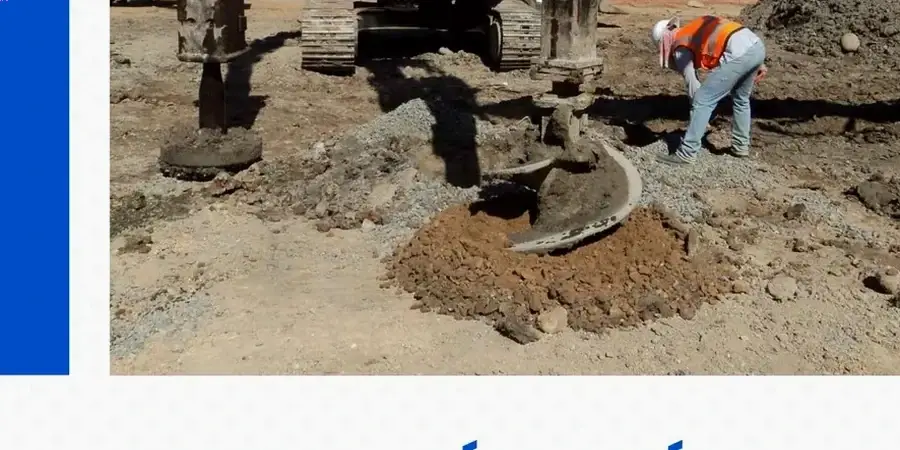
The ground beneath Richmond Hill tells two very different stories depending on where you stand. On the high ground of the Oak Ridges Moraine you’ll find sandy till and glaciofluvial deposits that drain fast but can be loose in places. Down along the Don River floodplain you hit softer, compressible silts and clays that behave completely differently under load. We’ve seen projects two blocks apart call for entirely different foundation strategies for exactly this reason. A thorough soil mechanics study gives your engineer the numbers needed to design confidently—shear strength parameters, consolidation potential, and bearing capacity specific to your lot rather than generic assumptions pulled from a regional map. When we combine that with in-situ testing like CPT we can map the transition between those two geological units with precision, avoiding surprises during excavation.

On the Oak Ridges Moraine, two neighboring lots can sit on completely different soil units—one on dense till requiring no improvement, the other on loose sand needing compaction.
Geotechnical Engineering in Richmond Hill
Technical reference — Richmond Hill

Our service areas

Local geology

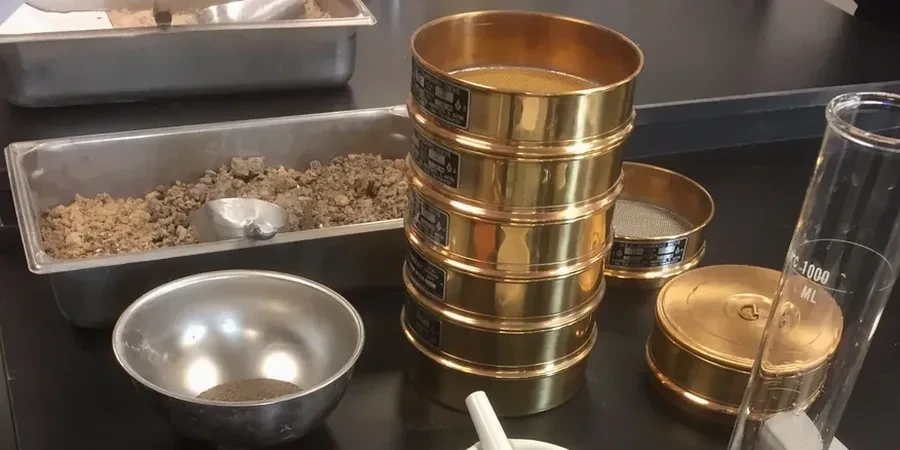
Richmond Hill sits roughly 265 meters above sea level along the crest of a major moraine system, and that elevation translates into variable overburden thickness and complex stratigraphy. Our lab runs a full suite of index and strength tests—grain size distribution per ASTM D422, Atterberg limits, consolidated-undrained triaxial—to isolate the mechanical behavior of each layer encountered in the borehole. Where the till is dense and overconsolidated we can often justify higher bearing pressures, but if we detect even thin seams of glaciolacustrine silt the settlement analysis becomes critical. For projects near the Yonge Street corridor where mid-rise developments are replacing older strip plazas, we frequently pair the soil mechanics program with grain size analysis to refine drainage design and lateral earth pressure assumptions. The report you receive includes the full stress-strain envelope, not just summary tables, so your structural engineer has the data needed for finite element modeling if the project demands it.

Applicable standards

NBCC 2020 Part 4 – Structural and Geotechnical Design, CSA A23.3 – Design of Concrete Structures (foundation provisions), ASTM D422 – Standard Test Method for Particle-Size Analysis of Soils, ASTM D4767 – Consolidated Undrained Triaxial Compression Test, Ontario Regulation 332/12 (Building Code) – local amendments

Need a geotechnical assessment?

Reply within 24h.

Email: info@geotechnicalengineering.co

Why choose us

What we observe repeatedly in Richmond Hill is that builders treat the entire moraine as uniform competent ground, and that assumption gets expensive. The contact between the Halton Till and the underlying sandy units is often gradational; we’ve pulled up Shelby tubes that look like dense material until you reach a thin silt lens at 6 meters that controls the entire settlement profile. Skipping a proper soil mechanics study means your foundation design relies on a single conservative bearing value that may be half of what the site can actually support—or worse, it misses a compressible layer that causes differential movement three years after occupancy. The Ontario Building Code requires geotechnical input for Part 4 design, and municipalities in York Region are increasingly strict about having lab-validated parameters, not just field logs, before issuing permits for anything beyond a single-family detached home.

Reference parameters

ParameterTypical value
Effective friction angle (Ø')28° - 38° depending on till density
Undrained shear strength (Su)30 - 150 kPa in cohesive units
Preconsolidation pressure (Pc)200 - 600 kPa in overconsolidated till
Compression index (Cc)0.05 - 0.35 for moraine silts and clays
Permeability (k)1x10⁻⁵ to 1x10⁻⁹ m/s by stratum
SPT N-value correlation range4 - 60+ (very loose to very dense)
Soil unit weight (γ)16.5 - 22.0 kN/m³

Common questions

What does a soil mechanics study include for a Richmond Hill residential lot?

For a typical single-family home we run Atterberg limits, grain size distribution, moisture content, and unconfined compressive strength on samples from each layer encountered. If the lot is on the floodplain side we add a consolidation test to estimate settlement. The report provides bearing capacity and lateral earth pressure values your designer can plug directly into the Ontario Building Code Part 4 checks.

How much does a soil mechanics study cost in Richmond Hill?

The lab program for a standard residential project typically ranges between CA$4,770 and CA$7,660, depending on the number of samples and whether advanced tests like triaxial or consolidation are required. A commercial or mid-rise study with full stress-strain characterization runs at the upper end and beyond, based on scope.

How long does it take to get results from the lab?

Basic index testing—moisture content, grain size, Atterberg—can be turned around in 5 to 7 business days. Consolidation and triaxial tests take longer, typically 10 to 15 business days, because we need to allow time for pore pressure equalization and staged loading. We send results in phases so the design team can start working with the index data while the strength tests are still running.

Is a soil mechanics study mandatory for a building permit in Richmond Hill?

Yes, for anything beyond a simple addition on a known lot. The City of Richmond Hill and the York Region building department require geotechnical input under the Ontario Building Code when you are using Part 4 structural design. Even for Part 9 housing, if the site conditions fall outside the prescriptive tables—which happens often on the moraine—the plans examiner will ask for a sealed geotechnical report with lab results.

Location and service area

We serve projects in Richmond Hill and surrounding areas.

View larger map