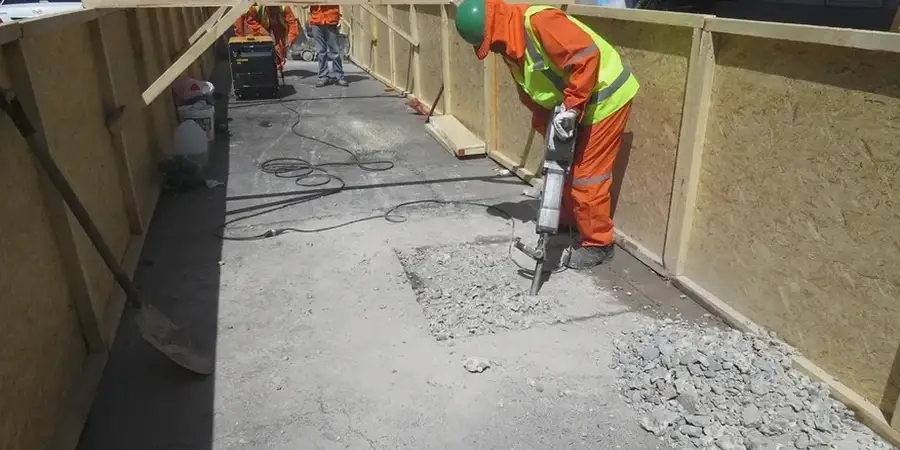
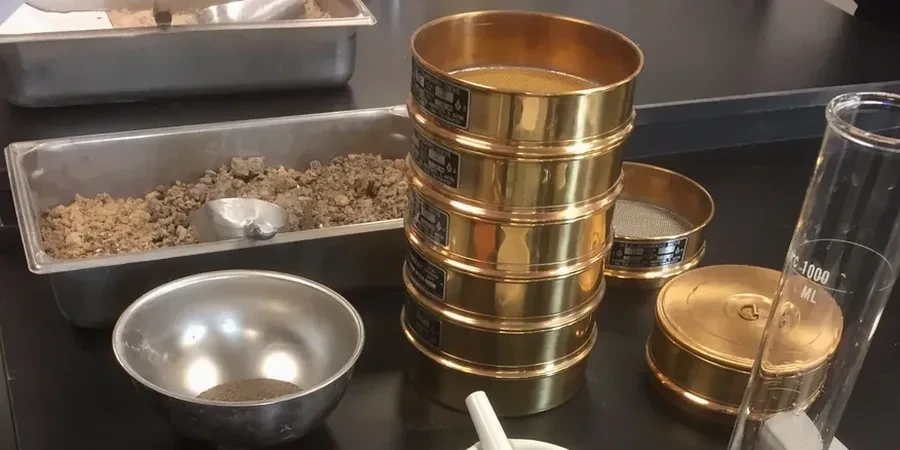
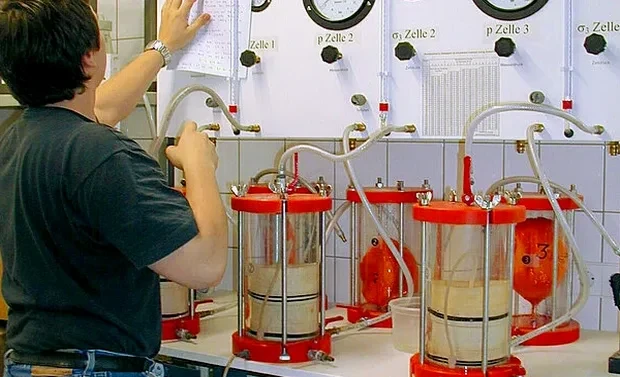
In Richmond Hill, the glacial history of the Oak Ridges Moraine left us with soils that range from dense sandy tills to pockets of silty clay that can hold water well into May. When a paving contractor or geotechnical consultant calls us about a subdivision road off Yonge Street, the first thing we ask is whether they have seen the subgrade after a week of rain. That field observation matters, but the number that locks in the pavement design comes from our laboratory. The California Bearing Ratio test, run on a remolded or undisturbed sample under controlled moisture and density, gives the engineer a direct measure of the soil's resistance to penetration. We run it alongside a grain size analysis to confirm fines content and a standard Proctor to tie the CBR value to a specific compaction level, because a CBR number without moisture-density context is just a guess.
A CBR value without a corresponding moisture-density curve is just a number—our lab ties both together so the pavement design stands up to Richmond Hill's freeze-thaw cycles.