GEOTECHNICALENGINEERING
RICHMOND HILL
HomeInvestigationSPT (Standard Penetration Test)

SPT Testing in Richmond Hill – Reliable N-Values, No Surprises

Evidence-based design. Reliable delivery.

LEARN MORE

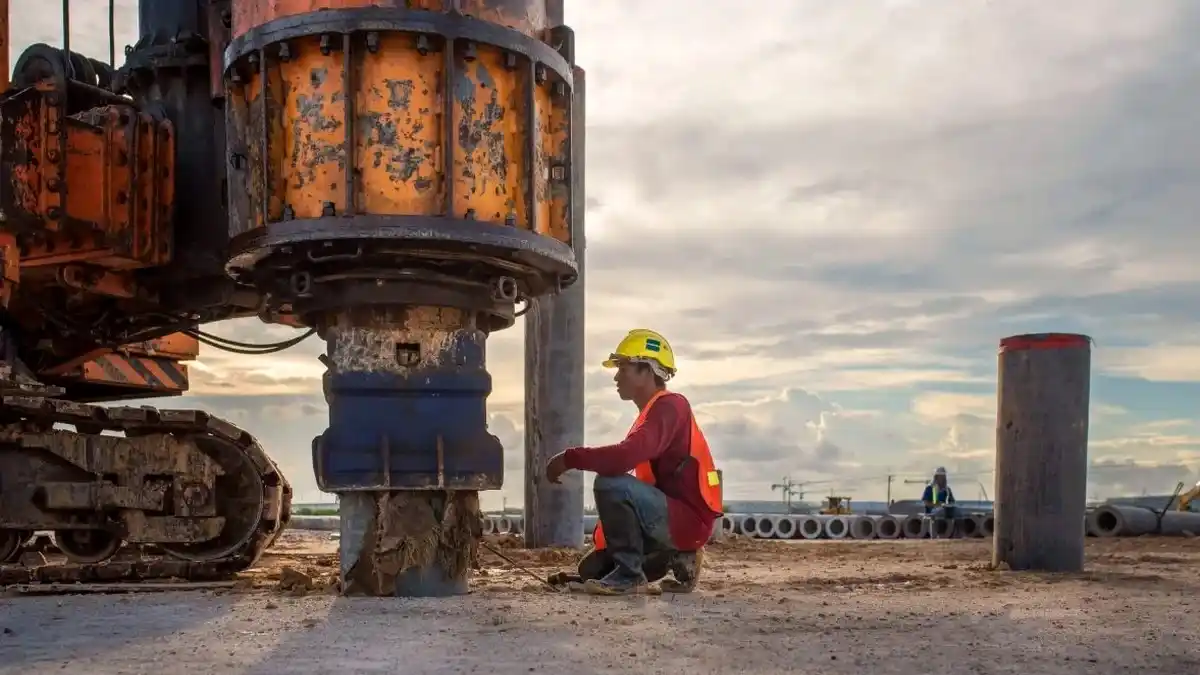
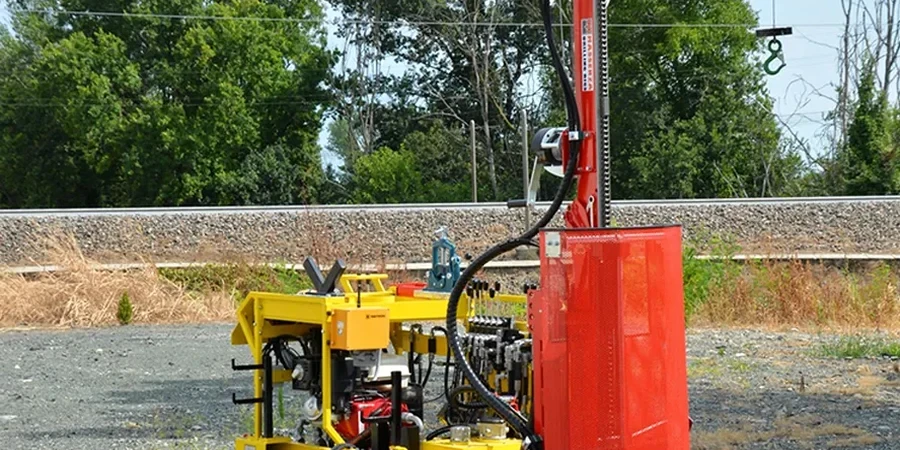
The biggest mistake we see in Richmond Hill projects is assuming uniform soil. You hit a dense till layer at 3 meters and think you’ve got bearing capacity sorted. Then a sand lens appears at 6 meters and the N-value drops to 6. We’ve pulled split spoons across the Oak Ridges Moraine for years. The stratigraphy here is chaotic: glaciolacustrine silts, sandy tills, and the occasional buried river channel. A standard penetration test is the only way to get a true vertical profile when granular lenses hide between cohesive layers. We run the SPT with a calibrated automatic trip hammer on a CME-75 rig. Every sampler is driven exactly 450 mm. We record the blow count for each 150 mm increment. The N-value you get is real, not a guess. For sites near the kettle lakes, we often pair SPT with CPT testing to cross-check pore pressure dissipation in silty zones that might liquefy under seismic load.

N-values alone are just numbers. The real value is knowing which till layer you’re in and whether it will drain or trap water under your foundation.
Our service areas

Methodology and scope

A practical observation: in Richmond Hill, the weathered crust on Halton Till fools a lot of drillers. The top 2 meters look stiff. Then you punch through into softer material below the desiccation zone. Our field crew knows this. We log every change in moisture, consistency, and color. This isn’t just about counting blows. It’s about reading the ground as we go.
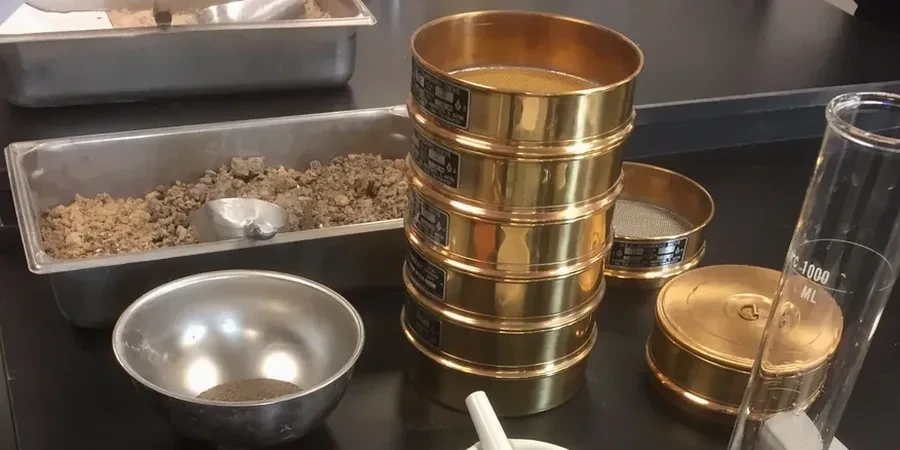
We follow ASTM D1586 with no shortcuts. The split spoon sampler is driven 450 mm after a 150 mm seating drive. We record N-values on-site and bag every sample. The samples go to our lab for moisture content, grain size, and Atterberg limits if needed. You get a boring log that’s actually useful for design. When the project requires footing settlement estimates, we correlate N-values with grain-size analysis to refine the modulus of elasticity for immediate settlement calculations.
SPT Testing in Richmond Hill – Reliable N-Values, No Surprises
Technical reference — Richmond Hill

Local geotechnical context

Richmond Hill grew fast. Subdivisions replaced farmland. Strip malls went up over buried creeks. The geotechnical legacy is a patchwork of fill, cut, and natural ground that doesn’t match any single soil report from across the street. The Oak Ridges Moraine adds another layer: groundwater flows through sand and gravel lenses that daylight on slopes. If you skip the SPT or drill too shallow, you miss these lenses. The result shows up later as differential settlement at the property line, or a retaining wall that tilts after the first spring thaw. We’ve seen a split-level on Yonge Street crack because the footing sat on 2 meters of stiff clay over a loose silt pocket that nobody tested. The fix cost ten times what a proper investigation would have. The SPT is cheap insurance. It catches the soft layer before the concrete goes in. For slope-adjacent builds, we cross-reference with a slope stability assessment to make sure the excavation doesn’t trigger a shallow failure.

Need a geotechnical assessment?

Reply within 24h.

Email: info@geotechnicalengineering.co

Applicable standards

ASTM D1586 (SPT), NBCC 2020 (National Building Code of Canada), CSA A23.3 (Concrete Design – foundation references), ASTM D2487 (Soil Classification), MTO Laboratory Testing Manual (LS-701)

Reference parameters

ParameterTypical value
EquipmentCME-75 track rig, auto-trip hammer
StandardASTM D1586 (Standard Penetration Test)
Seating drive150 mm (6 in)
Test drive300 mm (12 in) in two 150 mm increments
SamplerStandard split spoon, 50 mm O.D.
Typical depth range1.5 m to 30+ m (bedrock refusal)
ReportingN-value per increment, soil description, water level

Common questions

How much does an SPT test cost in Richmond Hill?

A typical SPT investigation with one borehole to 10-15 meters depth, including the rig, operator, split spoon sampling, and a basic boring log, runs between CA$780 and CA$890. Mobilization and deeper drilling or additional lab testing will adjust the final figure. We provide a fixed quote after reviewing your site location and depth requirements.

How deep do you need to drill for a house foundation?

For a residential footing in Richmond Hill, we recommend a minimum depth of 6 to 8 meters, or refusal on dense till or bedrock. Shallow boreholes miss the loose sand lenses common in the Oak Ridges Moraine. We follow NBCC guidelines and typically extend the borehole to at least 1.5 times the estimated stress influence zone.

What is the difference between SPT and CPT?

SPT gives you a soil sample and a blow count. CPT gives you continuous tip resistance and sleeve friction but no physical sample. In Richmond Hill’s mixed glacial soils, we use SPT for direct observation of grain size and consistency, and CPT when we need a detailed pore pressure profile in silty sands. They complement each other.

How long does an SPT investigation take?

A single borehole to 15 meters in typical Richmond Hill till takes one day on site. We deliver the boring log within 48 hours. If lab tests are requested, add 3 to 5 business days for results. Larger investigations with multiple boreholes are scheduled accordingly.

Do you provide seismic site classification from SPT data?

Yes. We use the N-value and shear wave velocity correlations from the SPT to determine the Site Class (A through E) according to NBCC Table 4.1.8.4.A. This is required for structural design in Richmond Hill and we include it directly in the geotechnical report.

Location and service area

We serve projects in Richmond Hill and surrounding areas.

View larger map