GEOTECHNICALENGINEERING
RICHMOND HILL
HomeFoundationsRaft/mat foundation design

Raft and Mat Foundation Design in Richmond Hill: Geotechnical Engineering for Deep Soil Stability

Evidence-based design. Reliable delivery.

LEARN MORE

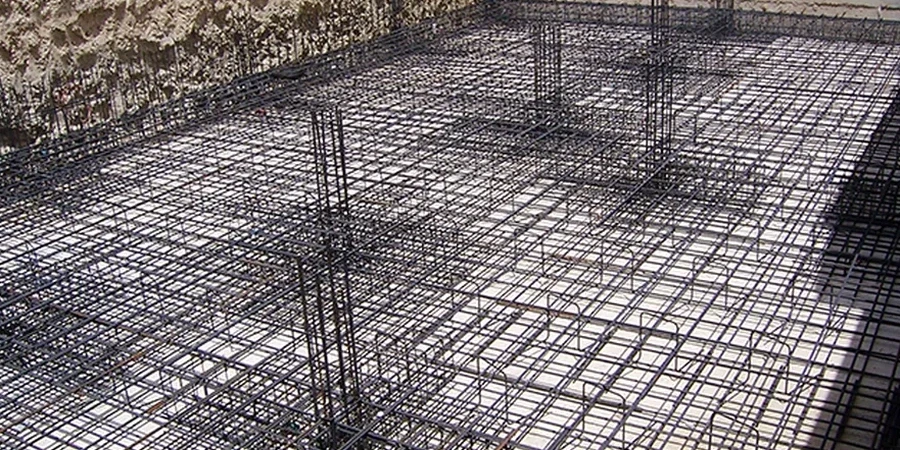
Richmond Hill's development arc from Yonge Street farming hamlet to dense suburban hub placed extraordinary demand on its underlying geology. The Oak Ridges Moraine deposits that define the northern half of the city create a layered stratigraphy of sand, silt, and till, often interrupted by buried valleys filled with compressible organic silts. South of Major Mackenzie Drive the ground transitions toward the glaciolacustrine clays of the former Lake Iroquois plain — soils that test your patience if you underestimate settlement. A raft or mat foundation becomes the logical answer when bearing pressures exceed what isolated footings can safely distribute across these variable profiles. The engineering team analyzes stratigraphy from borehole logs and CPT soundings to size a rigid slab that bridges softer pockets without differential movement. In the Don River headwaters area, where saturated fine sands raise liquefaction concerns under seismic loading, combining a mat with ground improvement techniques like stone columns often eliminates the need for deep piles altogether.

A well-designed mat foundation in Richmond Hill doesn't eliminate settlement — it makes it uniform enough that the structure never notices.

Our service areas

Methodology and scope

The National Building Code of Canada (NBCC 2020) and CSA A23.3-14 govern structural concrete design for mat foundations in Ontario, but the geotechnical input preceding those calculations makes or breaks the design. Richmond Hill sits in Seismic Category C with a 2% in 50-year spectral acceleration that demands explicit consideration of soil-structure interaction — a rigid mat behaves differently on 15 meters of dense Halton Till than on a pocket of Lake Iroquois clay. The borehole program must penetrate at least twice the mat width or reach refusal on till, whichever comes first, to capture the full compressible sequence. Consolidation parameters from oedometer tests feed into settlement predictions using Steinbrenner's layered method, while the modulus of subgrade reaction derived from plate load tests calibrates the Winkler spring model for finite element analysis. Groundwater in Richmond Hill fluctuates seasonally with snowmelt; perched water within the moraine's sand lenses requires buoyancy checks that a properly thickened edge beam addresses without over-designing the entire slab.
Raft and Mat Foundation Design in Richmond Hill: Geotechnical Engineering for Deep Soil Stability
Technical reference — Richmond Hill

Local geotechnical context

Richmond Hill straddles two hydrogeological regimes that punish foundation design mistakes differently. North of Elgin Mills the Oak Ridges Moraine acts as a regional recharge zone: heavy autumn rains and spring snowmelt raise the water table rapidly through sand channels, creating buoyancy forces and softening the bearing stratum beneath a mat that wasn't designed for saturated conditions. South toward Highway 7 the glaciolacustrine clays show shrink-swell potential during summer drought cycles, introducing edge-lift heave that can crack a rigid slab if the geotechnical investigation didn't quantify soil suction and plasticity. The buried valleys mapped by the Ontario Geological Survey cross Richmond Hill at several locations — a borehole terminating prematurely in dense sand might miss 8 meters of underlying soft silt, giving a false sense of security. When the risk profile includes both liquefiable sands and highly plastic clays on the same site, the mat design becomes a balancing act between liquefaction mitigation and heave protection, often requiring a cellular raft configuration with stiffening beams on a compacted granular mattress.

Need a geotechnical assessment?

Reply within 24h.

Email: info@geotechnicalengineering.co

Applicable standards

NBCC 2020 (National Building Code of Canada), CSA A23.3-14 (Design of Concrete Structures), ASTM D1195 / D1196 (Plate Load Test procedures), ASTM D2435 (One-Dimensional Consolidation Properties), Canadian Foundation Engineering Manual, 4th Edition

Reference parameters

ParameterTypical value
Design standard (concrete)CSA A23.3-14
Seismic design basisNBCC 2020, Site Class C–E
Minimum borehole depth2× mat width or till refusal
Typical subgrade modulus (Halton Till)30–60 MN/m³
Typical subgrade modulus (silty clay)8–18 MN/m³
Soil-structure interaction methodWinkler springs / FEM plate
Key consolidation parameterCv and Cc from incremental oedometer
Buoyancy check triggerPerched groundwater within 1.5 m of slab soffit

Common questions

When does a Richmond Hill project justify a mat foundation instead of isolated footings?

Three conditions typically trigger the switch. First, when the bearing stratum under footings would cover more than 50% of the building footprint — at that point the excavation and forming effort for individual pads exceeds the mat cost. Second, when total settlement under isolated footings exceeds 25 mm or differential settlement between columns exceeds 12 mm, the mat's rigidity forces uniformity. Third, sites in the Oak Ridges Moraine where buried valleys create abrupt transitions from dense till to soft silt: a mat bridges the weak zone without requiring deep piles. The geotechnical report quantifies these thresholds from borehole data and consolidation testing.

What is the typical cost range for a raft foundation design package in Richmond Hill?

A complete mat foundation design package — including the geotechnical investigation with 3–5 boreholes, laboratory consolidation and strength testing, subgrade modulus determination, and the structural design calculations — typically falls between CA$1,280 and CA$6,560. The range reflects site accessibility, borehole depth requirements (deeper investigation for poor soils), and whether plate load testing is specified to calibrate the modulus of subgrade reaction.

How does seismic design affect mat foundation thickness in Richmond Hill?

Under NBCC 2020 Seismic Category C, the mat must resist both inertial forces from the superstructure and kinematic soil-structure interaction effects. The design checks overturning moment transfer through the mat-soil interface, with bearing pressure under seismic load combinations limited to 1.5 times the static allowable. Thickness is often governed by punching shear at column connections rather than global bending — a 600 mm mat on competent till may suffice structurally, but the same building on Lake Iroquois clay might require 900 mm with drop panels to manage the reduced subgrade modulus and higher spectral acceleration from site class effects.

Location and service area

We serve projects in Richmond Hill and surrounding areas.

View larger map