GEOTECHNICALENGINEERING
RICHMOND HILL
HomeUnderground ExcavationsGeotechnical analysis for soft soil tunnels

Geotechnical Analysis for Soft Soil Tunnels in Richmond Hill, Ontario

Evidence-based design. Reliable delivery.

LEARN MORE

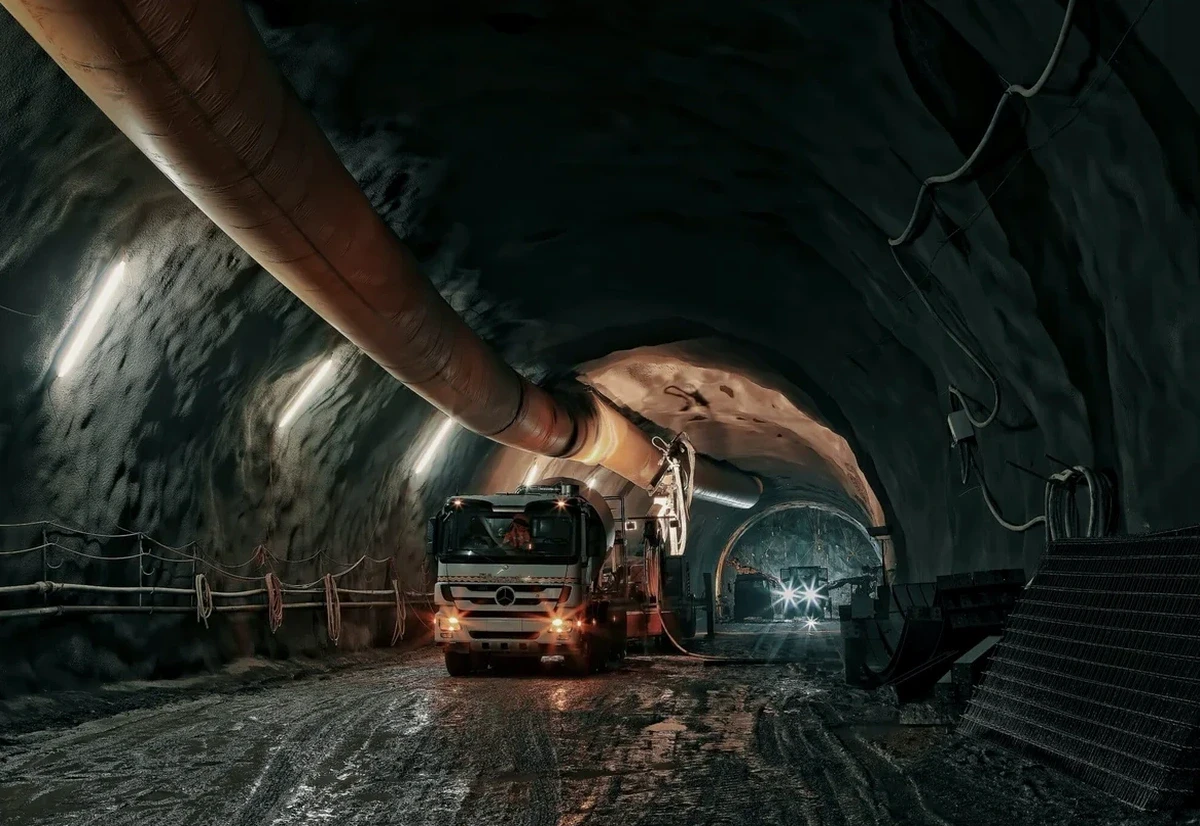
On a project north of Major Mackenzie Drive, you quickly realize that Richmond Hill's glacial stratigraphy doesn't read like a textbook. The Oak Ridges Moraine draped a complex sequence of silty clay, sand lenses, and dense Halton Till over the bedrock, and when a tunnel alignment cuts through the softer Newmarket Till, the behavior changes within meters. We have seen TBM drives that went smoothly through stiff clay suddenly encounter flowing sand pockets because the pre-investigation stopped at a dozen boreholes. A proper geotechnical analysis for soft soil tunnels here starts with a geological model that respects the moraine's heterogeneity—otherwise, the ground model is fiction. Before mobilizing the rig, we often recommend pairing the subsurface characterization with a CPT survey to capture the continuous stratigraphic profile, which standard SPT alone cannot resolve in interbedded deposits.

In Richmond Hill's moraine stratigraphy, the tunnel face stability is often controlled by a thin sand lens you didn't know was there—continuous CPT profiling catches what discrete SPT intervals miss.
Our service areas

Methodology and scope

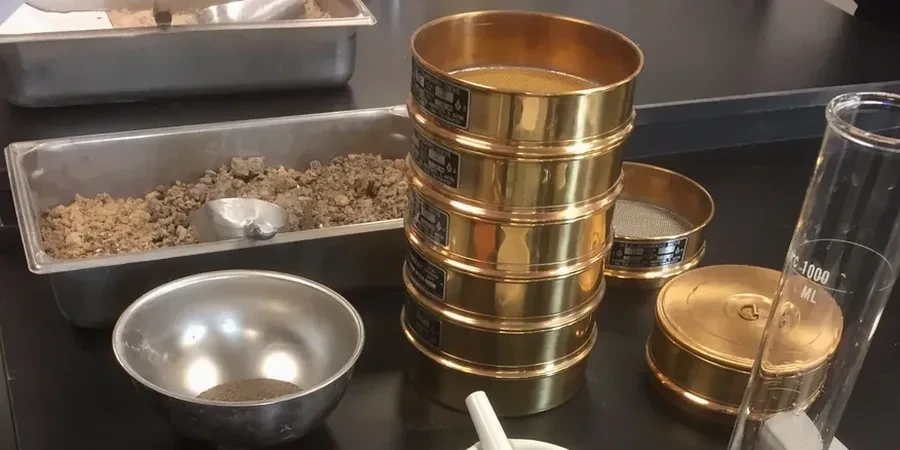
A recurring mistake we observe in Richmond Hill is treating the weathered upper till as a uniform soft clay for settlement predictions. The Newmarket Till has a desiccated crust that can be overconsolidated to 250 kPa near the surface, then drops to normally consolidated conditions at depth—a profile that produces asymmetric face deformation if the lining design only assumes isotropic stiffness. For tunneling under Yonge Street or near the Rouge River tributaries, the critical parameters are the undrained shear strength ratio (su/σ'v) and the coefficient of lateral earth pressure at rest (K0). Our laboratory program under CSA A23.3 and ASTM D4767 determines these through consolidated-undrained triaxial tests on Shelby tube samples, while the stress history is anchored to Atterberg limits and oedometer data to confirm the preconsolidation pressure profile. When the alignment crosses sandy interbeds, we supplement the permeability assessment with in-situ permeability testing in screened piezometers to quantify the risk of groundwater inflow at the face.
Geotechnical Analysis for Soft Soil Tunnels in Richmond Hill, Ontario
Technical reference — Richmond Hill

Local geotechnical context

The contrast between a tunnel alignment through the older Thornhill area versus a greenfield site near Lake Wilcox illustrates how risk shifts within the same municipality. In the south, where the till is denser and the cover thicker, the dominant concern is boulder obstruction from the Halton Till and long-term consolidation settlement under the surcharge of existing subdivisions. Up by the kettle lakes, the soft organic silts and higher water table drive a completely different failure mode: face blow-out and running ground if the pore pressure at the face is not carefully balanced. A geotechnical analysis for soft soil tunnels that ignores this spatial variability will either over-design the lining with costly steel sets or under-predict the settlement trough, damaging infrastructure. When the risk profile includes liquefiable sand layers—something we have observed in boreholes east of Bathurst Street—we integrate liquefaction assessment using Seed & Idriss simplified procedure to determine if the tunnel invert requires densification or drainage measures.

Need a geotechnical assessment?

Reply within 24h.

Email: info@geotechnicalengineering.co

Applicable standards

National Building Code of Canada (NBCC 2020), CSA A23.3: Design of Concrete Structures, ASTM D4767: Consolidated-Undrained Triaxial Compression Test on Cohesive Soils, ASTM D2487: Unified Soil Classification System, Ontario Regulation 588/17 (Environmental Assessment requirements for municipal infrastructure)

Reference parameters

ParameterTypical value
Undrained shear strength (su)25–120 kPa (varies with depth and till unit)
Preconsolidation pressure (σ'p)150–400 kPa (crust) to 80–150 kPa (deep)
Permeability (k) of matrix till1×10⁻⁹ to 5×10⁻¹⁰ m/s
Lateral earth pressure coefficient (K0)0.45–0.70 (overconsolidated zone)
Plasticity index (PI)10–25% (silty clay till)
Groundwater table depth1.5–4.0 m below grade (seasonal)
Sand lens permeability (k)1×10⁻⁴ to 5×10⁻⁶ m/s (interbedded lenses)

Common questions

What is the typical cost range for a soft soil tunnel geotechnical investigation in Richmond Hill?

Depending on the tunnel length, depth, and complexity of the ground conditions, a comprehensive investigation program—including boreholes, CPT soundings, laboratory testing, and a geotechnical interpretative report for tunneling—generally falls between CA$5,150 and CA$23,370. The final scope and cost are determined after reviewing the preliminary alignment and any historical borehole data available from the York Region archives.

Which laboratory tests are critical for characterizing Richmond Hill's glacial till for TBM tunneling?

Consolidated-undrained (CU) triaxial tests with pore pressure measurement per ASTM D4767 are essential to define the undrained shear strength profile. Oedometer consolidation tests provide the preconsolidation pressure and compression index (Cc) for settlement predictions. We also run a full suite of index tests—Atterberg limits, grain size distribution, and natural moisture content—on every Shelby tube sample to correctly classify the till unit and identify thin interbeds of sand or silt that can change the face behavior.

How do you handle the groundwater and flowing sand risk during tunneling in this area?

We install nested piezometers in separate boreholes to measure the hydraulic head in the sand lenses independently from the till matrix. Slug tests or pumping tests in these piezometers yield the field-scale permeability, which is usually 100 to 1000 times higher in the sand lenses than in the till. This data feeds into a groundwater model that defines the required face pressure and the potential need for pre-drainage or ground treatment along the critical reaches, especially where the tunnel crown intersects the contact between the upper weathered till and the underlying dense Halton Till.

What Ontario regulations govern the geotechnical investigation for a municipal tunnel project?

The structural design follows NBCC 2020 and CSA A23.3 for concrete linings, while the geotechnical investigation methodology and reporting align with the Canadian Foundation Engineering Manual and ASTM standards for laboratory testing. For municipal projects in York Region, the investigation must also satisfy the environmental assessment requirements under Ontario Regulation 588/17, particularly regarding borehole decommissioning and groundwater monitoring if the alignment crosses environmentally sensitive areas like the Oak Ridges Moraine aquifer recharge zones.

Location and service area

We serve projects in Richmond Hill and surrounding areas.

View larger map