GEOTECHNICALENGINEERING
RICHMOND HILL
HomeLaboratoryTriaxial test

Triaxial Testing in Richmond Hill: Shear Strength Parameters for Foundation Design on Glacial Soils

Evidence-based design. Reliable delivery.

LEARN MORE

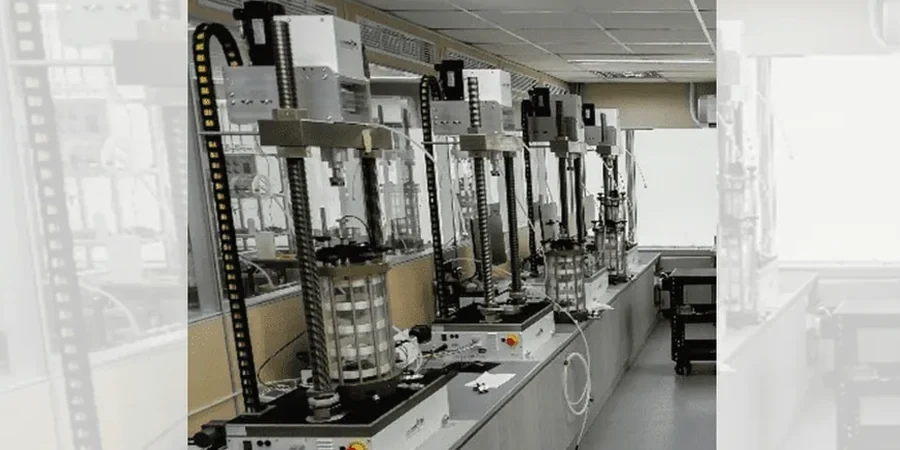
Richmond Hill sits at roughly 230 meters above sea level, perched on the Oak Ridges Moraine—a geological feature that dictates almost everything about our local soil behavior. The moraine left behind a complex mix of dense sandy silt till, interbedded with pockets of soft glaciolacustrine clay. When a project on Yonge Street or near the Rouge River headwaters demands deep excavation or a heavily loaded footing, we can't rely on textbook values. We need the actual effective stress parameters, and that's where the triaxial test becomes non-negotiable. Our team runs consolidated-undrained (CU) and consolidated-drained (CD) triaxial tests on Shelby tube samples extracted right from the site, ensuring the friction angle and cohesion we report reflect the real in-situ conditions, not just a guess.

On the Oak Ridges Moraine, a dense till layer with 80% fines can fail at half the shear strength you'd estimate from blow counts alone.
Our service areas

Methodology and scope

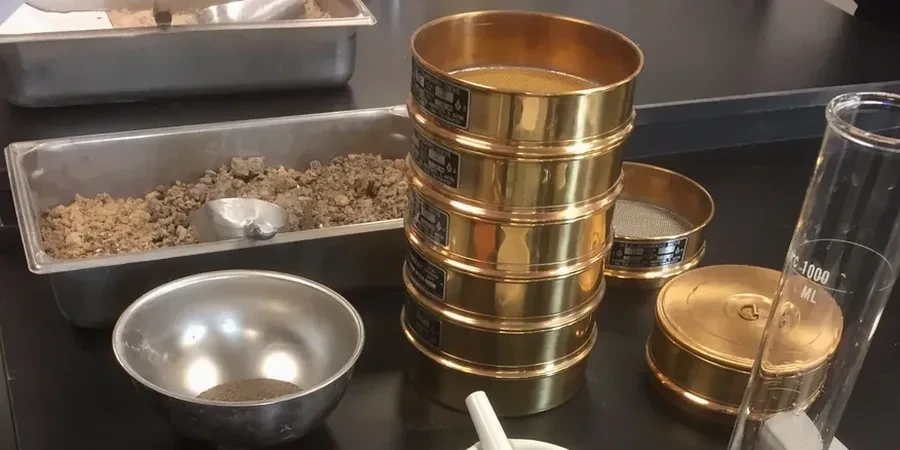
What we see repeatedly in Richmond Hill is that the till matrix can fool you. During a standard SPT, it often gives blow counts above 30, suggesting a competent bearing stratum. But if that till contains lenses of silt or pockets of varved clay—common near the Beaver Creek floodplain—the undrained shear strength can drop sharply under construction loading. That's why a CU triaxial test with pore pressure measurement is essential. We often pair it with a CPT test to profile the stratigraphy before selecting sample depths, or we use grain size analysis to confirm the fines content that's driving the undrained behavior. The test itself is run under strict CSA A23.3 guidelines, with back-pressure saturation to ensure B-values above 0.95, giving us confidence in the pore pressure response during shearing.
Triaxial Testing in Richmond Hill: Shear Strength Parameters for Foundation Design on Glacial Soils
Technical reference — Richmond Hill

Local geotechnical context

The contrast between the west and east sides of Richmond Hill highlights the variability. West of Bathurst, you're on the high part of the moraine with dense, overconsolidated till—generally good material, but prone to dilatancy that can confuse a simple total-stress analysis. East of Leslie, dipping toward the Rouge River valley, we encounter softer, normally consolidated clay layers where undrained shear strength (Su) from a UU triaxial test is a critical design input. Skimping on the test in these lower-lying areas is a gamble. We've reviewed designs where assuming a uniform Su of 50 kPa across a site led to a slope failure during excavation for a stormwater pond. A single CU triaxial test with pore pressure measurement would have revealed the true effective stress envelope and prevented the problem.

Need a geotechnical assessment?

Reply within 24h.

Email: info@geotechnicalengineering.co

Watch the video

Applicable standards

NBCC 2020 (National Building Code of Canada), CSA A23.3: Design of Concrete Structures, ASTM D4767: Standard Test Method for Consolidated Undrained Triaxial Compression Test for Cohesive Soils, ASTM D7181: Standard Test Method for Consolidated Drained Triaxial Compression Test for Soils

Reference parameters

ParameterTypical value
Test Types AvailableCU, CD, UU (Unconsolidated-Undrained)
Sample Diameter50 mm (2.0 in) standard; 70 mm available for coarse till
Saturation MethodBack-pressure saturation (B-check > 0.95)
Shearing RateStrain-controlled, 0.02 to 0.5 mm/min depending on drainage
Confinement RangeUp to 1000 kPa cell pressure
Data OutputMohr-Coulomb failure envelope, stress paths, pore pressure vs. strain
StandardsASTM D4767 (CU), ASTM D7181 (CD)

Common questions

What's the difference between a UU and CU triaxial test for my Richmond Hill project?

A UU (unconsolidated-undrained) test gives you total stress parameters—quick and conservative for short-term stability on clay sites. A CU (consolidated-undrained) test with pore pressure measurement gives you effective stress parameters (c' and φ'), which you need for long-term stability analysis, especially when modeling excavations or slopes in the Oak Ridges Moraine till where drainage conditions change over time.

How much does a triaxial test cost?

For a standard set of three specimens to define the Mohr-Coulomb envelope, the cost ranges from CA$2.300 to CA$3.250, depending on whether you need CU or CD protocols and the required consolidation stress range. The price includes sample extrusion, back-pressure saturation, shearing, and a full engineering report with stress paths.

Can you run triaxial tests on sand from the Oak Ridges Moraine?

Yes, but it's a delicate process. We typically use a CD (consolidated-drained) test for the sandy interbeds. Sample preparation is key—we freeze the Shelby tube samples on site when possible, then carefully extrude and trim them in the lab to preserve the natural fabric. For loose, saturated sands, we can also run CU tests to evaluate liquefaction potential under Richmond Hill's seismic demands.

What sample quality do you need for a reliable triaxial test?

We need undisturbed Shelby tube samples, ideally 75 mm diameter, pushed with a smooth, continuous stroke using a drilling rig. Thin-wall tubes (AW, BW, or NX) work well in the local till. We log every sample for disturbance indicators—bending, cracking, or gravel impacts. If a sample shows significant disturbance, we'll recommend a new boring rather than report questionable parameters.

Location and service area

We serve projects in Richmond Hill and surrounding areas. More info.

View larger map