GEOTECHNICALENGINEERING
RICHMOND HILL
HomeGround improvementStone column design

Stone Column Design in Richmond Hill: Ground Improvement for Weak Soils

Evidence-based design. Reliable delivery.

LEARN MORE

Richmond Hill's growth from a quiet farm community into a major GTA hub has pushed development onto the Oak Ridges Moraine's more challenging terrain. The city sits at roughly 43.88°N latitude, where glacial Lake Algonquin left behind a complex tapestry of sands, silts, and soft clays that make foundation design anything but routine. When a site on Yonge Street or near the Rouge River valley shows more than two meters of compressible soil, standard footings become a risk rather than a solution. Our team applies stone column design to reinforce these weak deposits, creating stiff composite ground that controls settlement and boosts bearing capacity. We pair this approach with a thorough understanding of Ontario's glacial stratigraphy, ensuring the column layout works with the native soil rather than against it. For sites where the organic content is unusually high, we often recommend confirming the soil profile first with test pits to calibrate the design parameters before mobilization.

Stone columns don't just carry load—they transform a slow-draining clay into a stiff, fast-consolidating composite that behaves more like dense sand.

Our service areas

Methodology and scope

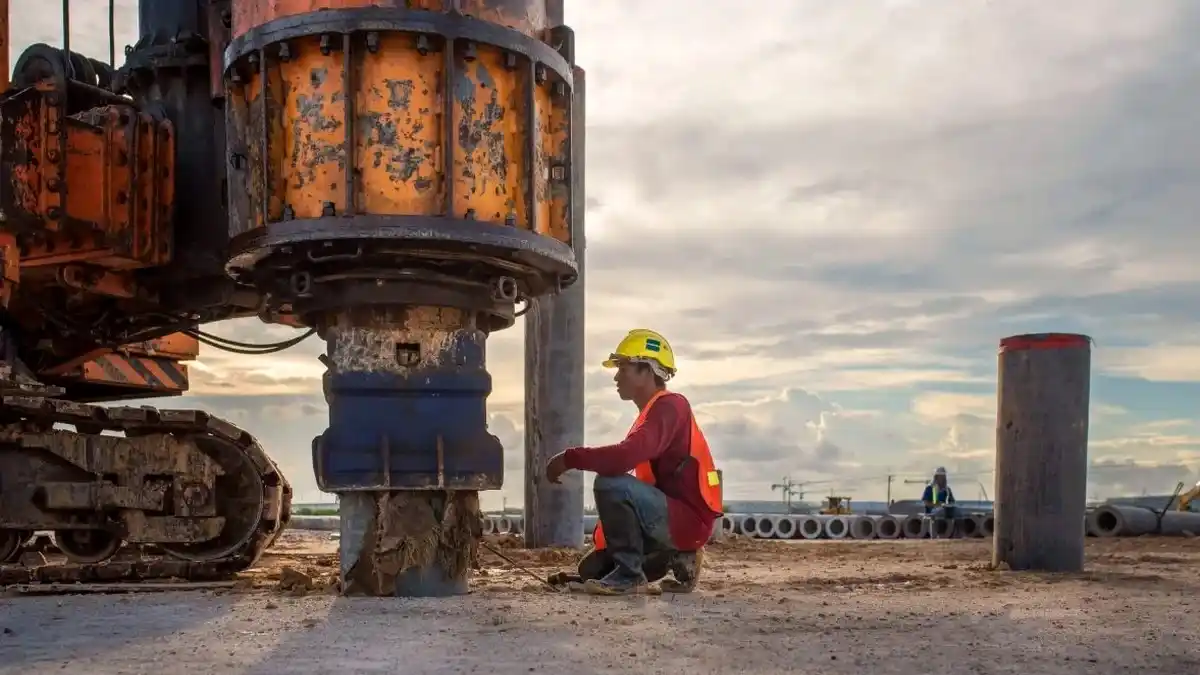
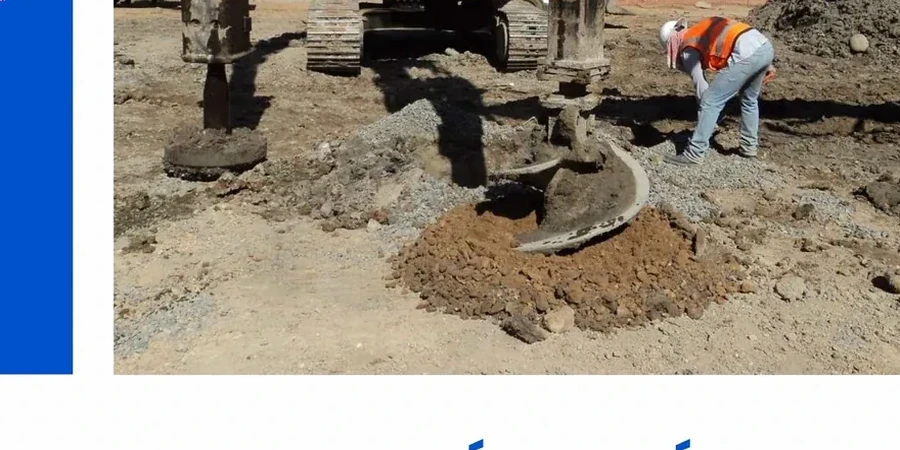
A reality we see repeatedly across Richmond Hill: the upper fill layer from 1970s subdivision grading masks a natural clay bed that consolidates slowly and unevenly under load. Stone column design addresses this by installing dense aggregate columns at a grid spacing calculated to transfer stress away from the clay matrix. We specify angular crushed stone, typically 25 to 50 mm in gradation, compacted in lifts using a vibratory probe and backfill process that bulges the column into the surrounding soil. The result is a composite ground mass with a stiffness ratio of 2:1 or better relative to the untreated soil. Drainage improves dramatically too—the columns act as vertical wicks, accelerating primary consolidation from months to weeks. For heavy floor slabs in the Beaver Creek Business Park area, we often integrate this with a plate load test program to verify the modulus of the treated ground before structural design proceeds. Key design variables include the area replacement ratio, column length relative to the soft layer depth, and the friction angle of the stone, all tested against NBCC 2015 Part 4 requirements for limit states design.
Stone Column Design in Richmond Hill: Ground Improvement for Weak Soils
Technical reference — Richmond Hill

Local geotechnical context

Richmond Hill's climate throws two opposing challenges at stone column performance. Late winter thaw saturates the upper silty crust just when spring construction starts, and the dry summer months can drop the water table enough to reduce confining pressure around the upper meter of each column. In the moraine's stratified deposits, a thin sand lens just below the clay layer can act as a drainage sink during installation, pulling fines into the stone and reducing permeability. This is where the Oak Ridges Moraine's hydrogeology demands extra care: we specify a graded filter transition zone when piezometric data shows upward gradients exceeding 0.2. The freeze-thaw cycle also affects the upper 1.2 meters of treated ground, so we design the top of the column to sit below the frost penetration depth and cap it with a compacted granular pad. Skipping a proper liquefaction screening in the sandy interbeds—even though Richmond Hill sits in a moderate seismic zone under NBCC—can overlook a failure mode that compromises the entire grid.

Need a geotechnical assessment?

Reply within 24h.

Email: info@geotechnicalengineering.co

Watch the video

Applicable standards

NBCC 2015 Part 4 Structural Design, CSA A23.3 Design of Concrete Structures (foundation provisions), ASTM D6913 / D7928 for stone gradation and fines content, OPSS.MUNI 1000 for granular material quality, MTO Foundation Engineering Manual for ground improvement design

Reference parameters

ParameterTypical value
Typical column diameter600 to 900 mm
Area replacement ratio10% to 25% of total plan area
Effective depth rangeUp to 15 m in Richmond Hill clays
Target SPT N-value (treated ground)N60 > 15 to 20 blows/300 mm
Post-treatment settlement criterion< 25 mm differential for rigid structures
Stone gradation (typical)25–50 mm angular crushed limestone or granite
Design reference standardCSA A23.3 / NBCC 2015 / FHWA Geotechnical Circular

Common questions

What is the typical cost range for stone column design and installation in Richmond Hill?

For a standard residential or light commercial project in the Richmond Hill area, the combined design and installation cost typically falls between CA$1,990 and CA$6,350, depending on column depth, grid density, and access conditions. Larger industrial sites with deeper soft layers will exceed this range. We provide a fixed-price proposal after reviewing the geotechnical report and site constraints.

How long does it take for the ground to consolidate after stone column installation?

Stone columns cut the drainage path in half or better, so primary consolidation that might take six months in an untreated Richmond Hill clay can finish in four to six weeks. We typically recommend a waiting period of at least 30 days before applying full structural load, confirmed by settlement monitoring on site.

Can stone columns be used under a basement slab in Richmond Hill?

Yes, and this is a common application in the Oak Ridges Moraine corridor. The column grid is designed to support the slab and footings as a unified system. We specify a load transfer platform—usually 300 to 450 mm of well-graded granular fill—above the column tops to distribute wall and column loads evenly into the improved ground.

What soil conditions in Richmond Hill make stone columns the right choice?

Stone columns work best in soft to firm clays and silts with undrained shear strength between 15 and 50 kPa. Richmond Hill's Halton Till and glaciolacustrine clays often fall in this range. The technique is less effective in very stiff till or where boulders are abundant, which is why we always run a CPT or SPT investigation before finalizing the design.

Do I need a building permit for stone column ground improvement in Richmond Hill?

Yes, ground improvement work requires a building permit from the City of Richmond Hill when it's part of a foundation or site servicing plan. Our design package includes the sealed engineering drawings and geotechnical report needed for the permit application, referencing NBCC 2015 and the Ontario Building Code.

Location and service area

We serve projects in Richmond Hill and surrounding areas.

View larger map