GEOTECHNICALENGINEERING
RICHMOND HILL
HomeIn-Situ TestingField permeability test (Lefranc/Lugeon)

Field Permeability Testing (Lefranc/Lugeon) in Richmond Hill, ON

Evidence-based design. Reliable delivery.

LEARN MORE

The glacial stratigraphy underlying Richmond Hill tells a story of ancient Lake Iroquois shorelines and drumlin fields—and with it, a subsurface where permeability can flip from tight silty till to open sand and gravel lenses within a meter. On a recent project near the Oak Ridges Moraine, perched groundwater in a sand seam went undetected until our in-situ permeability testing mapped a preferential flow path feeding the excavation. That kind of surprise is expensive. A proper field permeability test (Lefranc or Lugeon) in Richmond Hill isn't just a checkbox for the hydrogeological report; it captures the mass hydraulic conductivity that lab tests on small samples routinely miss, especially in heterogeneous overburden or fractured shale of the Georgian Bay Formation. We run these tests in boreholes across Richmond Hill to give dewatering contractors and foundation designers numbers they can actually rely on, whether for a deep basement near Yonge Street or an infiltration gallery serving a low-impact development.

A single Lugeon test in fractured Georgian Bay Formation tells you more about how the rock mass handles water than a dozen lab perm tests on intact core.
Our service areas

Methodology and scope

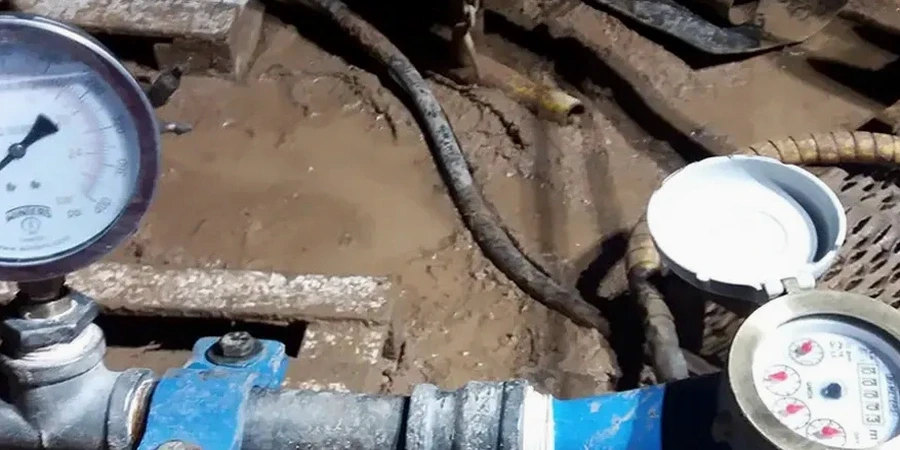
The most common mistake we see in Richmond Hill is relying solely on grain-size correlations for permeability when the ground truth is dominated by secondary features—fissures in the Newmarket Till, root casts in weathered crust, or open joints in the underlying shale. A Lefranc test in overburden or a Lugeon test in rock gives you direct measurement, not an estimate. The Lefranc method uses either a constant or falling head in a cased borehole section, typically over a 50–100 cm test interval, to determine hydraulic conductivity in soils where particle size alone doesn't predict flow. When we hit rock, the Lugeon test pressurizes a packed-off interval, often at five pressure stages, to measure water take in Lugeon units (1 Lu ≈ 1.3×10⁻⁷ m/s). This isn't just about getting a k-value; the pressure-step pattern reveals whether fractures are dilating, washing out, or clogging—critical intel if you're planning a grouting program for shaft sinking or cutoff walls. Our field crews in Richmond Hill log every test with time-pressure-flow curves because flat data without interpretation is just noise.
Field Permeability Testing (Lefranc/Lugeon) in Richmond Hill, ON
Technical reference — Richmond Hill

Local geotechnical context

In Richmond Hill, perched water tables within the Oak Ridges Moraine sediments are notoriously unpredictable. We've seen excavations stay dry through November and then flood in March because a thin silty sand stringer at 4 metres depth—invisible on split spoon samples—connected to a distant recharge zone. If your permeability model is based on textbook values or grain-size correlations alone, the dewatering system will be undersized and you'll be pumping turbid water off-site under a ministry compliance headache. The Lugeon test also flags a risk that gets overlooked: hydrofracturing. When packer pressures exceed the minimum in-situ stress, you can jack open natural fractures and permanently increase rock mass permeability—exactly the opposite of what a grouting program intends. Our team watches for this in real time, throttling pressure stages to stay below the fracture initiation threshold. Skip proper field permeability testing in Richmond Hill and you're gambling with groundwater control on a site where the moraine hydrostratigraphy can switch from aquifer to aquitard inside a single borehole.

Need a geotechnical assessment?

Reply within 24h.

Email: info@geotechnicalengineering.co

Applicable standards

ASTM D6391-11: Standard Test Method for Field Measurement of Hydraulic Conductivity Using Borehole Infiltration, ASTM D4630-96(2008): Standard Test Method for Determining Transmissivity and Storage Coefficient of Low-Permeability Rocks, CSA A23.3: Design of Concrete Structures (geotechnical input sections), Ontario Building Code (OBC) — geotechnical investigation requirements

Reference parameters

ParameterTypical value
Test methods offeredLefranc (constant/falling head), Lugeon (packer test)
Applicable strataOverburden soils, glacial till, fractured bedrock, weathered shale
Typical test interval50–100 cm (Lefranc), 1–5 m packed-off (Lugeon)
Measured range10⁻⁴ to 10⁻⁹ m/s (Lefranc), 0.1 to >100 Lugeon units
Reporting outputHydraulic conductivity (k in m/s), Lugeon values, pressure-flow plots
Applicable standardsASTM D6391, ASTM D4630, CSA A23.3 guidance
Typical Richmond Hill geologyNewmarket Till, Oak Ridges Moraine sands, Georgian Bay Fm shale

Common questions

What does a field permeability test cost in Richmond Hill?

For budgeting, a single Lefranc or Lugeon test setup in Richmond Hill generally falls between CA$890 and CA$1,530 depending on depth, number of test intervals, and whether we're mobilizing to an existing borehole or drilling new. A full-day program with multiple intervals and a comprehensive report typically runs higher. We provide a fixed-price proposal once we review your borehole logs and test depth requirements.

When should I specify a Lugeon test instead of a Lefranc test?

Lugeon tests apply to rock—in Richmond Hill, that usually means the Georgian Bay Formation shale or limestone encountered below the overburden. If your investigation extends into bedrock and you need to assess fracture flow, grout take, or rock mass permeability for a deep excavation or tunnel, a Lugeon packer test is the right call. Lefranc testing stays in the soil column: till, sand, gravel, and weathered zones.

How many test intervals do I need for my Richmond Hill site?

It depends on stratigraphic complexity. In the Oak Ridges Moraine, where sand and till alternate sharply, we recommend one Lefranc test per distinct hydrostratigraphic unit—often 3 to 5 intervals in a 15-metre borehole. For bedrock Lugeon testing, spacing test intervals every 3 to 5 metres along the cored section captures fracture variability. We can advise on test frequency after reviewing your geological model and project objectives.

Location and service area

We serve projects in Richmond Hill and surrounding areas.

View larger map