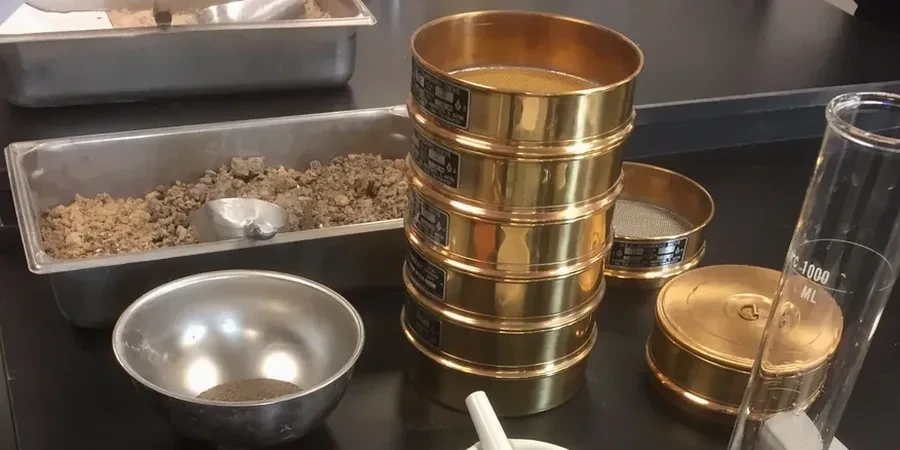
A mid-rise residential development along Yonge Street hit groundwater earlier than the borehole logs predicted, threatening a six-week delay. The contractor needed a cutoff that wouldn't disturb the adjacent heritage building. That's the kind of scenario where grouting design stops being a generic specification and becomes the critical path. Richmond Hill sits on the Oak Ridges Moraine, and the subsurface here alternates between dense Halton Till, sand lenses, and silty clay layers that can channel water unpredictably. A proper grouting program reads that stratigraphy first: target the permeable stringers with microfine cement, stabilize the interface between till and sand with compaction grouting, and leave the cohesive layers undisturbed. Permeation grouting works where grain-size distribution allows particle travel, while jet grouting creates soilcrete columns in zones too heterogeneous for permeation. Our team develops injection parameters—pressure, volume, refusal criteria—based on lab testing of site-specific samples rather than textbook values. When the Yonge Street project restarted, the dewatering requirement dropped by 70% and the shoring design could proceed without contingency for running sands. For deeper verification of soil behavior before grouting, we often combine the design phase with an in-situ permeability test to quantify hydraulic conductivity across each stratum.
Effective grouting design in glacial terrain means the difference between a dry excavation and a groundwater claim that doubles the project cost.